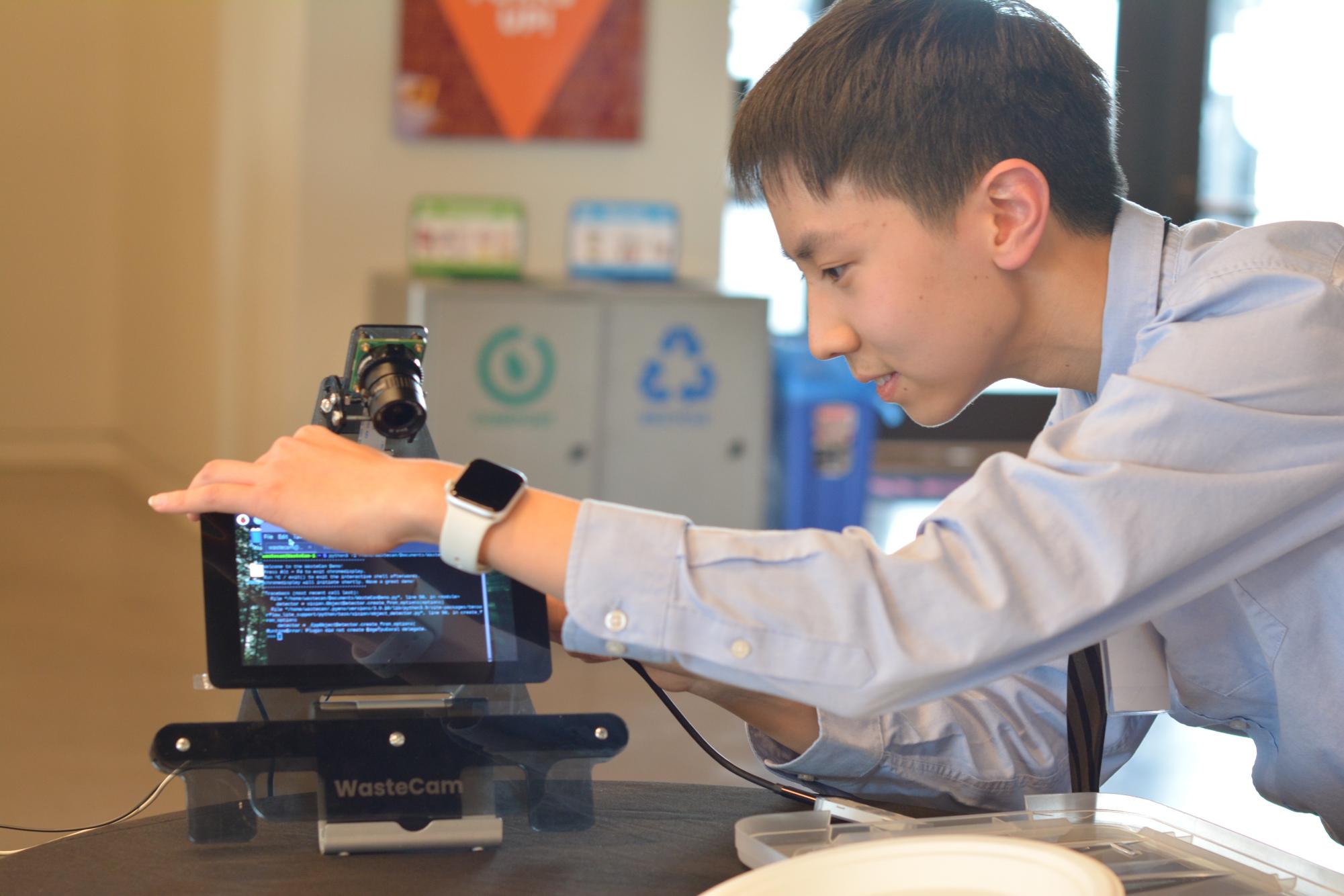
Waste audits at Brophy College Preparatory revealed that up to half of compostable items were ending up in the wrong bin. Fully compostable utensils, plates, and napkins were producing methane in landfills | a greenhouse gas 80 times more potent than CO₂.
Presentations and updated signage only partially addressed the issue. We needed something smarter. Something that could intervene at the exact moment of disposal.
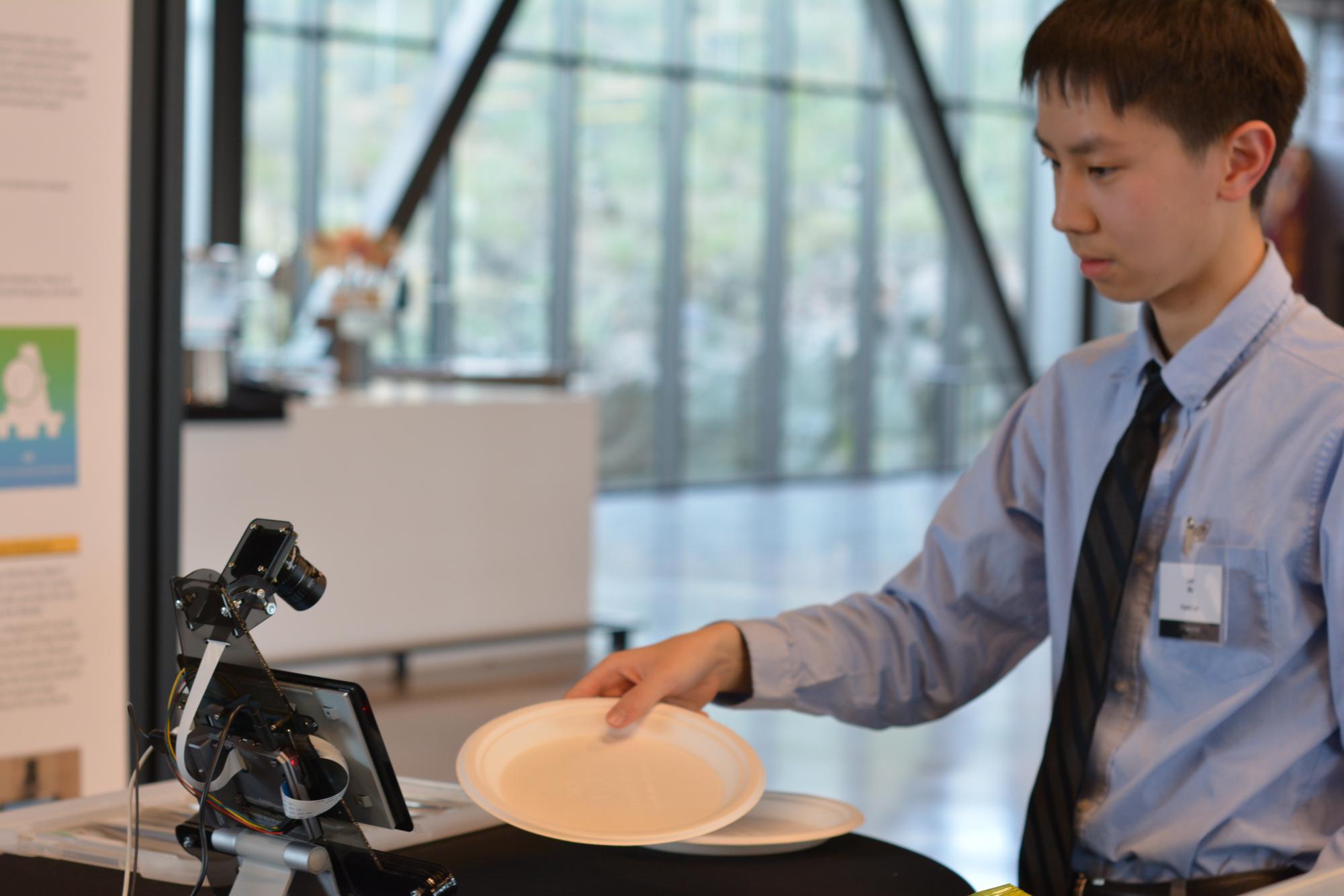
Our latest version uses a TensorFlow Lite machine learning model paired with compact, affordable hardware. When a student holds an item in front of the camera, WasteCam analyzes it in real time and directs it to the correct receptacle | compost, recycling, or landfill | on a touch screen display.
Over the past year, we've iterated through countless versions, tackling real-world challenges like lighting variation and object overlap. We are continuing development until we can secure a consistent error rate of less than 5%.
A custom-trained TensorFlow Lite image recognition model optimized to run on low-power hardware, capable of identifying dozens of common waste items in real time.
Single-board computer, camera module, touch screen display, and a carbon fiber enclosure | all selected for durability, affordability, and ease of campus installation.
Designed from the ground up to be affordable and replicable, so schools across the country | including under-resourced communities | can adopt the technology without prohibitive cost.
WasteCam is currently being prototyped at Brophy College Preparatory, but our vision extends far beyond one campus. We envision adoption at schools and universities nationwide | and eventually, in large public-facing institutions and corporations. Accessible, student-built climate technology, deployed at scale.